
A conversation with our urologist, Dr Corne van Graan
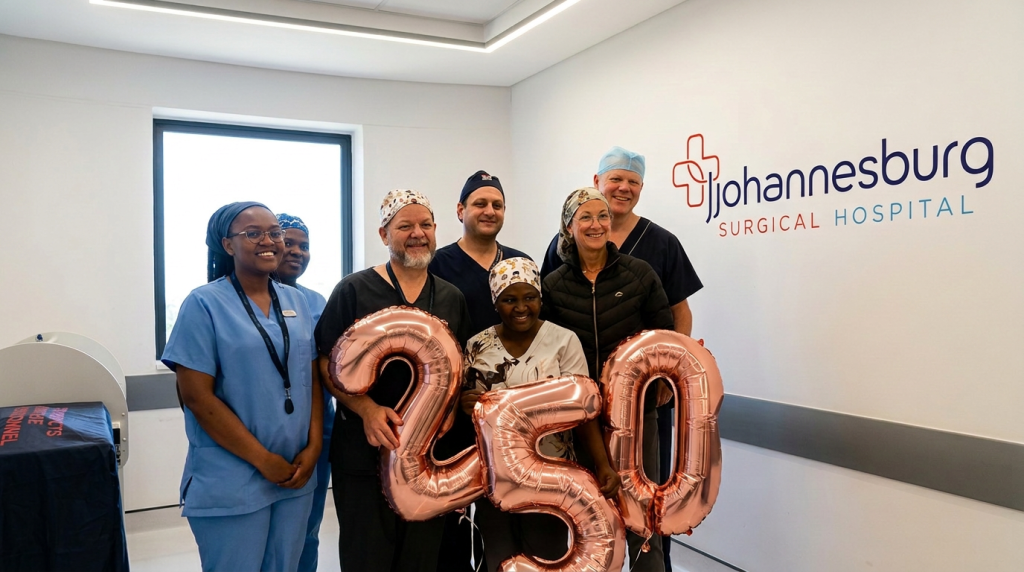
Urologist Dr Corne van Graan recently performed his 250th da Vinci robotic surgery at Johannesburg Surgical Hospital, a personal milestone built on years of skill, training and teamwork in theatre. We sat down with Dr van Graan to talk about what good patient care looks like to him, why men should stop putting off check-ups, and how technology is changing surgery.

Dr Corne van Graan, Urologist at Johannesburg Surgical Hospital
Care that starts with listening
For Dr van Graan the guiding principle is simple: “treat every patient the way you would want your own family treated”.
“That starts with listening properly and explaining things clearly.” Patients hear what is going on, what their options are, and the honest pros and cons of each, including the option of doing nothing at all.
Urology deals with sensitive topics, and many men arrive feeling embarrassed or anxious. Dr van Graan works to make the consultation a space where no question is off limits.
“I would rather spend an extra ten minutes explaining than have a patient leave confused.”
When surgery is needed, the aim is to choose the least invasive option that will give the best long-term result.
Men, don’t wait for symptoms
Men are notoriously good at avoiding doctors. That, says Dr van Graan, is exactly why prostate cancer is still so often diagnosed late in South Africa.
“Early prostate cancer usually causes no symptoms. Waiting for symptoms means waiting too long.”
The South African Urological Association and the Prostate Cancer Foundation recommend starting screening at these ages:
| START SCREENING | WHO |
| From 40 | Men known to carry certain cancer genes, such as BRCA2 |
| From 45 | Black African men, and men whose father, brother or son had prostate cancer, or whose mother or sister had breast cancer |
| From 50 | All other men |
Screening starts with a simple PSA blood test. How often to repeat it depends on your result and your personal risk, so it is a conversation to have with your doctor.
While you are at your GP, it is also a good chance to check your blood pressure, blood sugar and cholesterol. Dr van Graan’s advice is clear:
“Don’t wait for a problem. Book the test.”
Robots, AI and the surgeon’s judgement
Change can feel uncomfortable, but Dr van Graan believes medicine has one simple test for new technology: does it help the patient? “If it does, we have an obligation to learn it properly.”
Technology does not replace a surgeon’s judgement and experience. It extends what a skilled surgeon can do.
The da Vinci robot gives the surgeon a magnified 3D view and instruments that move with more precision than the human hand, especially in a confined space like the pelvis. For patients, that typically means:
- Smaller incisions
- Less blood loss
- Less pain
- A quicker return to normal life
In robotic prostatectomy (removal of the prostate), that precision also helps preserve the delicate structures that control bladder function and erections, two of the things men worry about most.
Reaching his 250th robotic case is a significant personal achievement, but Dr van Graan is quick to credit the people around him: the theatre staff, anaesthetists and the hospital team at Johannesburg Surgical Hospital. “I’m grateful to be part of it.”
Artificial intelligence will follow a similar path. Used responsibly, it will make doctors better at their jobs.
“The doctors who embrace it carefully will serve their patients better than those who ignore it.”
Take the first step. Whether it is a routine PSA test or a conversation about treatment options, the message is the same: the earlier you talk to someone, the more options you have.
Book a consultation +27 11 794 3549 / +27 11 014 0532 | www.jsh.co.za
GP referrals: Contact the rooms on the numbers above or email appointment@urology.joburg